A Celebration
Brick Lane Jazz Festival, London: Friday, Saturday and Sunday April 24, 25 and 26, 2026

A quick explanatory note: I started writing this for UK Jazz News, quickly realised it was going to be beyond too long, thought I could maybe split it into separate parts, but after consultation with my long-suffering editor decided to just put the whole thing here, and let UKJN readers click through if they feel so minded (UPDATE: a highlights/overview thing is now on UKJN). (AND A FURTHER UPDATE: UKJN have added a piece by Haydon Spenceley, reviewing the Bar Juju stage on Saturday, which I didn’t get to see any of. It’s a great read and the perspective Haydon offers on the overall tone and atmosphere of the event is invaluable and inspiring). To anyone visiting for the first time - welcome, please make yourselves at home, and thanks for coming. To both of my other readers, thanks for coming back! And hopefully this isn’t going to push you beyond endurance. Without further ado, then, off we go…
All good things come to an end - but not every good thing ends perfectly. The 2026 edition of the Brick Lane Jazz Festival was that cherishably rare example of a very good thing that reached a superb conclusion, with the last tune of the last set by the last of the headline artists providing an unbetterable summation of the key themes to emerge or be developed over the course of a rich and rewarding weekend.
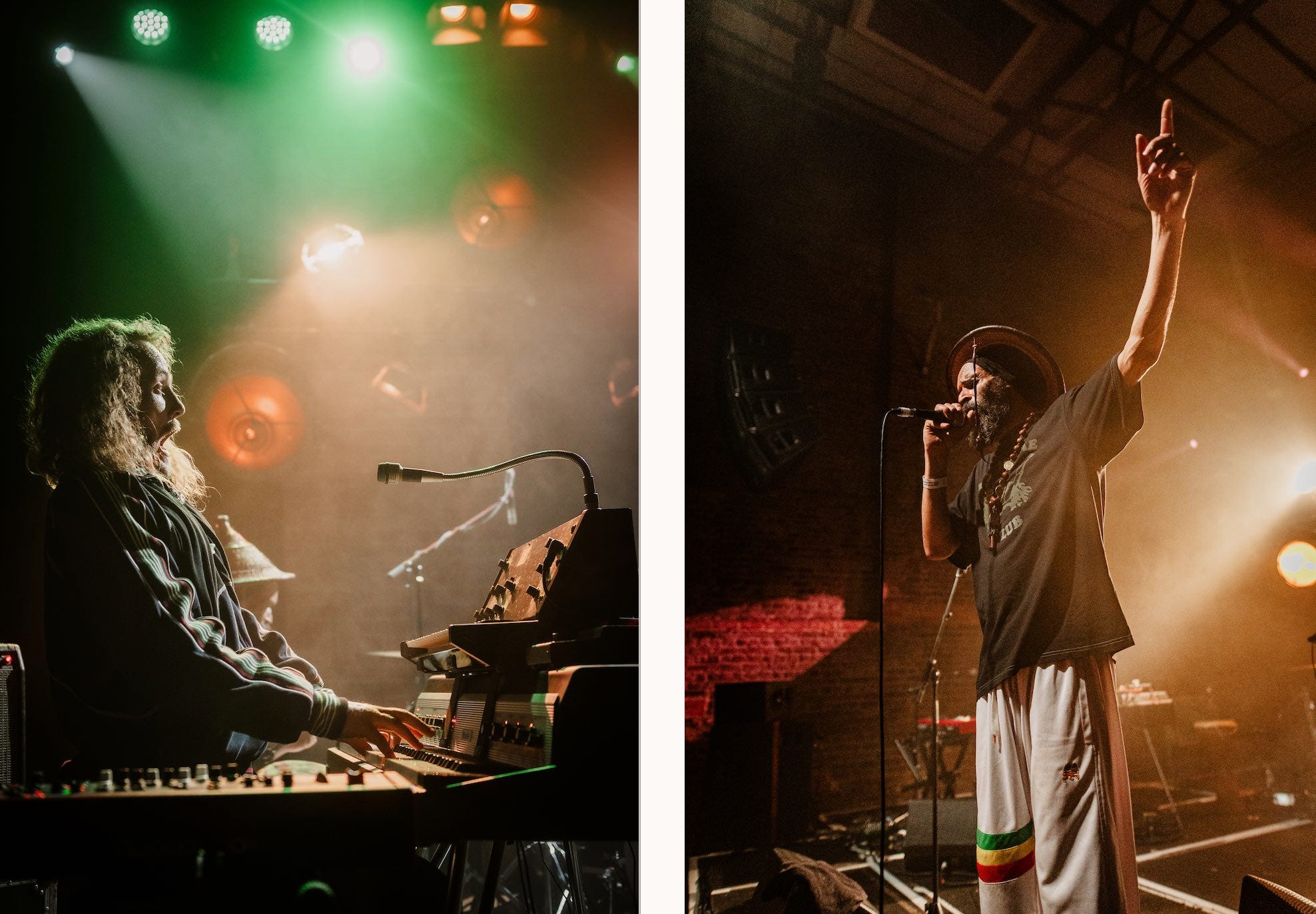
On the largest of the festival’s 11 stages, at Village Underground, Joe Armon-Jones and his band brought their set to a close with the song ‘Kingfisher’, taken from the first volume of his All the Quiet two-LP project, released in 2025. An ambitious but urgent (double-) double concept album, All the Quiet posits a future hellscape where music has been replaced by “control tones” and a determined, ragged resistance is making its last stand in The Citadel, the one place left where music is still being made and played. The LPs were written and recorded before streaming platforms became infested by files made by so-called “AI” software, presented to listeners as if it were real music made by real musicians - but that unhappy development has lent prescience and urgency to what had hitherto perhaps seemed an alarmist vision.
As the wonderful singer, percussionist and all-round inspirational presence Asheber sang ‘Kingfisher’ and gave its rotating slate of mantras his unique combination of warmth, uplift, strength and encouragement (”We don’t die, we multiply”; “We plan for revolution, where I come from”), it was difficult to avoid feeling that the festival and its attendees were performing a role in our present era of chaos and confusion that the Citadel and the resistance occupy in Armon-Jones’s dystopian fiction. The weekend had been a profuse, diverse and envelopingly inclusive celebration of musical individuality, creativity and community - the living, breathing antidote to a world progressively being ruined by technocratic elites and a politics of division and hate. Simply by showing up to perform and to listen, everyone involved was playing an important role: together, implicitly, these moments can help reset the balance.
Just as important was that ‘Kingfisher’ stands as a fine example of music that engages in an active, respectful and excited/exciting dialogue with its influences and its historical antecedents. Stylistically, the piece encompasses several different elements - a double-time drum pattern embellishes a floating, mellifluous bass line, around which Armon-Jones’ keyboards shimmer and sparkle, nodding not just to jazz but drum & bass, reggae, dub and hip-hop. Lyrically, Asheber blends the abstract with the literal as he writes this new music into the history books alongside its thematic and political inspirations. And as he sang what often feels like the song’s key line - “Sam Cookin’ up in the kitchen - a change is gonna come” - there was an almost palpable sense of eras, sounds and styles being pulled together. Earlier, the band had paid tribute to the late D’Angelo with a tremendous version of his 28-year-old classic ‘Devil’s Pie’, a song that found the singer staring down the barrel at an apocalypse caused by the addiction of materialism: in their vigorous and creatively questing new reading - the only elements left untouched being the bass line and the lyric - Armon-Jones and his band linked our current era and its music with another (similarly troubled) time and place, and with an artist whose work is one of the more important touchstones for a new generation of musical iconoclasts.
These ideas of influence and exchange were resonant across the weekend. For the first time, BLJF hosted a conference programme, and during a session on Friday, involving keyboardist, composer and singer Brian Jackson (who headlined Village Underground on Saturday); bassist and founder of Tomorrow’s Warriors, Gary Crosby OBE; saxophonist, rapper and broadcaster Soweto Kinch; and journalists Emma Warren and Jane Cornwell, a debate was conducted around how, and to what extent, the American and UK jazz worlds do, could and should collaborate and co-operate. Questions around difference and division were largely bypassed - Crosby argued that risking having different forms of jazz-based music set against one another would be a dangerous waste of time and energy when all types of jazz are fighting for audiences, attention and funding that predominantly accrues to pop music.
But the warning to look beyond such distinctions felt timely. Never mind the UK and the U.S., there are scenes-within-scenes in Britain’s jazz world itself, which can sometimes seem as if they’re being manoeuvred into opposition with one another. The BLJF seems to be seen by some as representative of only a narrow part of Britain’s jazz spectrum, and by others as spotlighting music that may only overlap with jazz to a limited degree. There may be merit to these arguments, but pursuing them is surely counterproductive. If there is a distinction to be drawn between the vision of “jazz” as exemplified by BLJF and any other definition, certainly, it seems to be less about the music than it is about the musicians - and, specifically, their age.
For the most part, the BLJF line-up foregrounds younger players. But that does not mean that the festival only gives a platform to musicians who are making music that deliberately or self-consciously melds traditional elements of jazz practice to other, newer, less-obviously-jazz-derived forms. Indeed, a great many of the weekend’s sets came from musicians who seem to revel in the unending possibilities offered by swing, bop, post-bop and ballad styles, and whose youth simply underlines how vibrant, resonant and alive with potential such venerable forms still are.
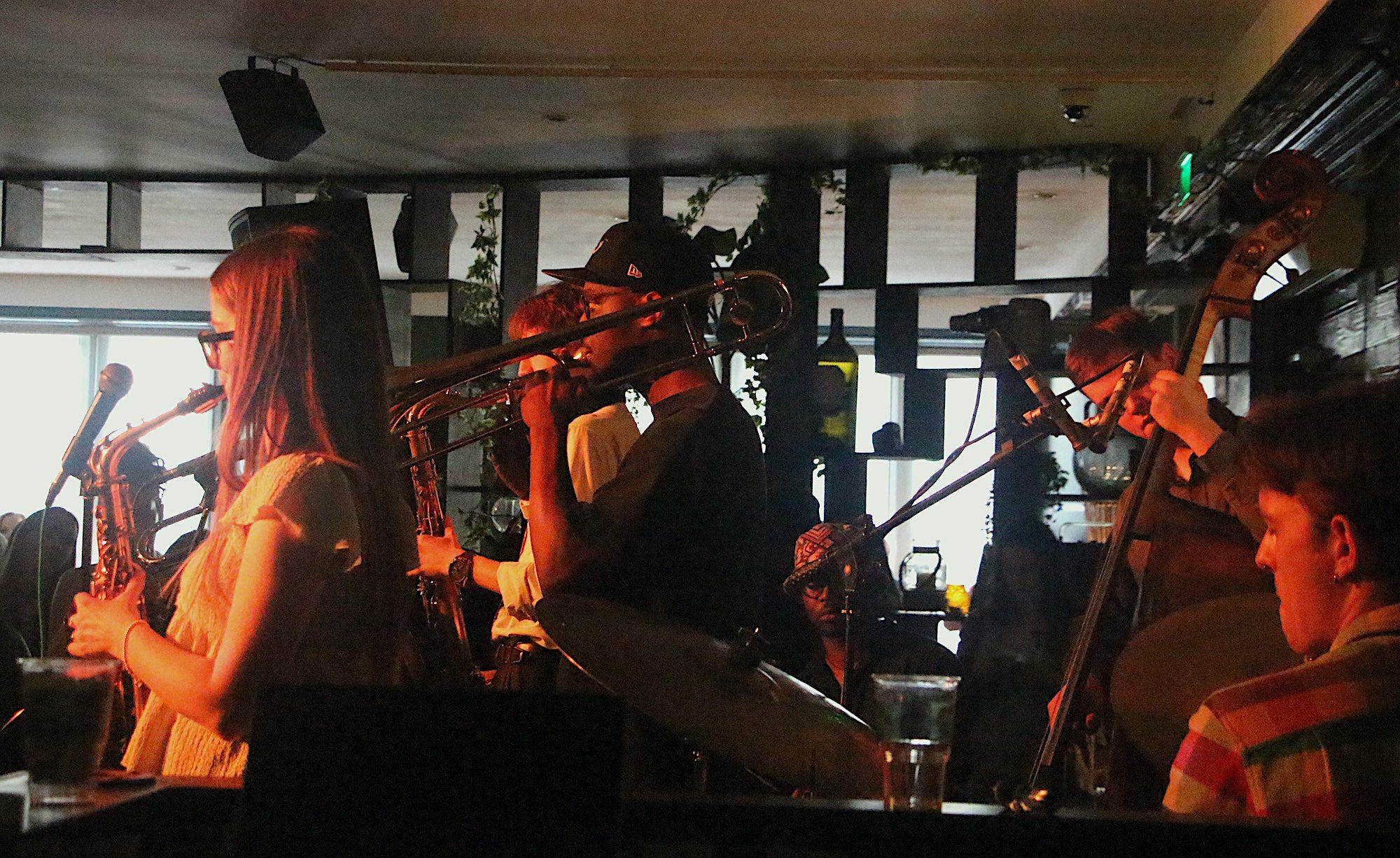
Take Saturday afternoon’s performance by Christ-Stéphane Boizi, for example. The 22-year-old trombonist explained how the second song of the set, ‘Raymond’, was written as a tribute to his grandfather, and was deliberately constructed to honour his favourite artist - Art Blakey. The set built on and around exactly the kind of down-the-line influential excellence that the storied hard bop pioneer is synonymous with, while allowing Boizi and his sparkling young band (including the former Parliamentary Jazz Awards best newcomer, pianist Sultan Stevenson; the double-bass player Tom Sheen; and a superb altoist, Lauren-Marie Breen) to stamp their own individuality and identity on their work. The approach wound their contributions together with their leader’s very personal and lyrical take on faith and spirituality, and sketched his original tunes like the looming, portentous ‘Golgotha’ and the even more overtly religious opener and closer - ‘Grant Us Peace Our Father’ and ‘The Sustainer of My Faith’ - into both the gospel and the spiritual jazz traditions.
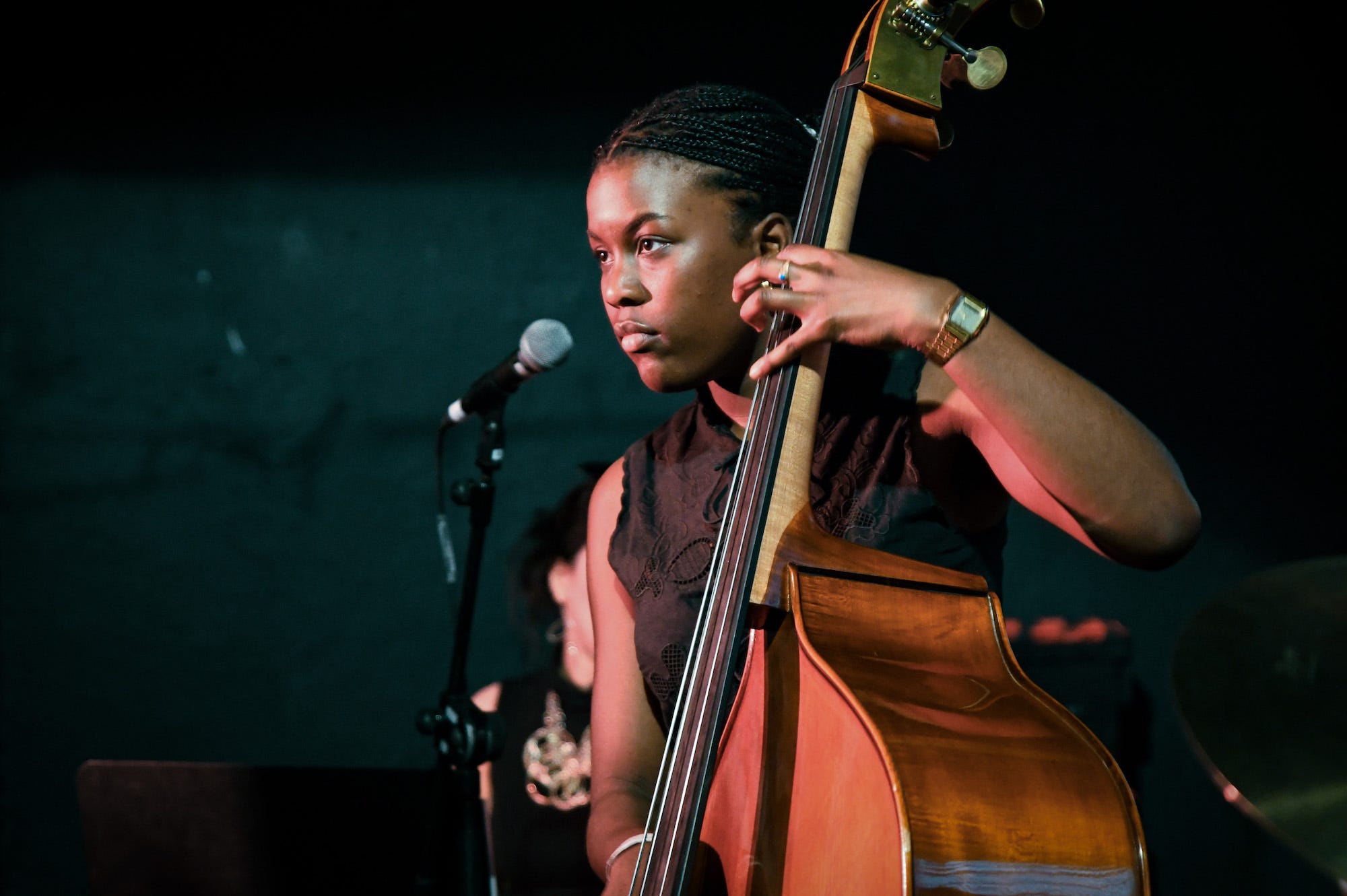
As well, consider Friday evening’s no-less-dazzling set of driving, swinging, tradition-infused post bop by the breakout bass star Genevieve Namazzi, recently seen in the band for the West End production of the Rosetta Tharpe musical, who brought her Quartet (including pianist Emily Tran and saxophonist Maddy Coombs, who each played their own shows on Saturday) to the Tomorrow’s Warriors stage. Before the second tune, she set the audience a little quiz: guess what “inanimate object” the track was written about. There were clues strewn all around the busy, locomotive piece: afterwards, she told us she composed it following a visit to Devon during which she had had her first ever ride on a steam train - an experience so amazing and unprecedented to her that she felt compelled to make art in response to it. Hardly a new subject for songwriters, but most of the songs that spring to mind would have been written in the early part of the 20th century, when steam travel was still an everyday, routine event: Namazzi necessarily approaches the subject with an entirely different perspective, so her new take adds copiously to an already considerable canon. Not content to look at familiar topics through new eyes, she also writes about subjects that maybe haven’t entered many other musicians’ consciousnesses yet: the last track of her far-too-short set was ‘Look Up’, written after she learned about the growing problem of orbital debris. So the piece addresses space travel, technology, extraterrestrial ecology and social responsibility in one fell swoop, yet arrived wrapped up in the trappings of music that wouldn’t have sounded out of step with the times had it been playing when NASA introduced the Mercury Seven to the world in 1959. Here was another artist whose music instinctively and naturally synthesised the past and the present, and who clearly has an extremely bright future.
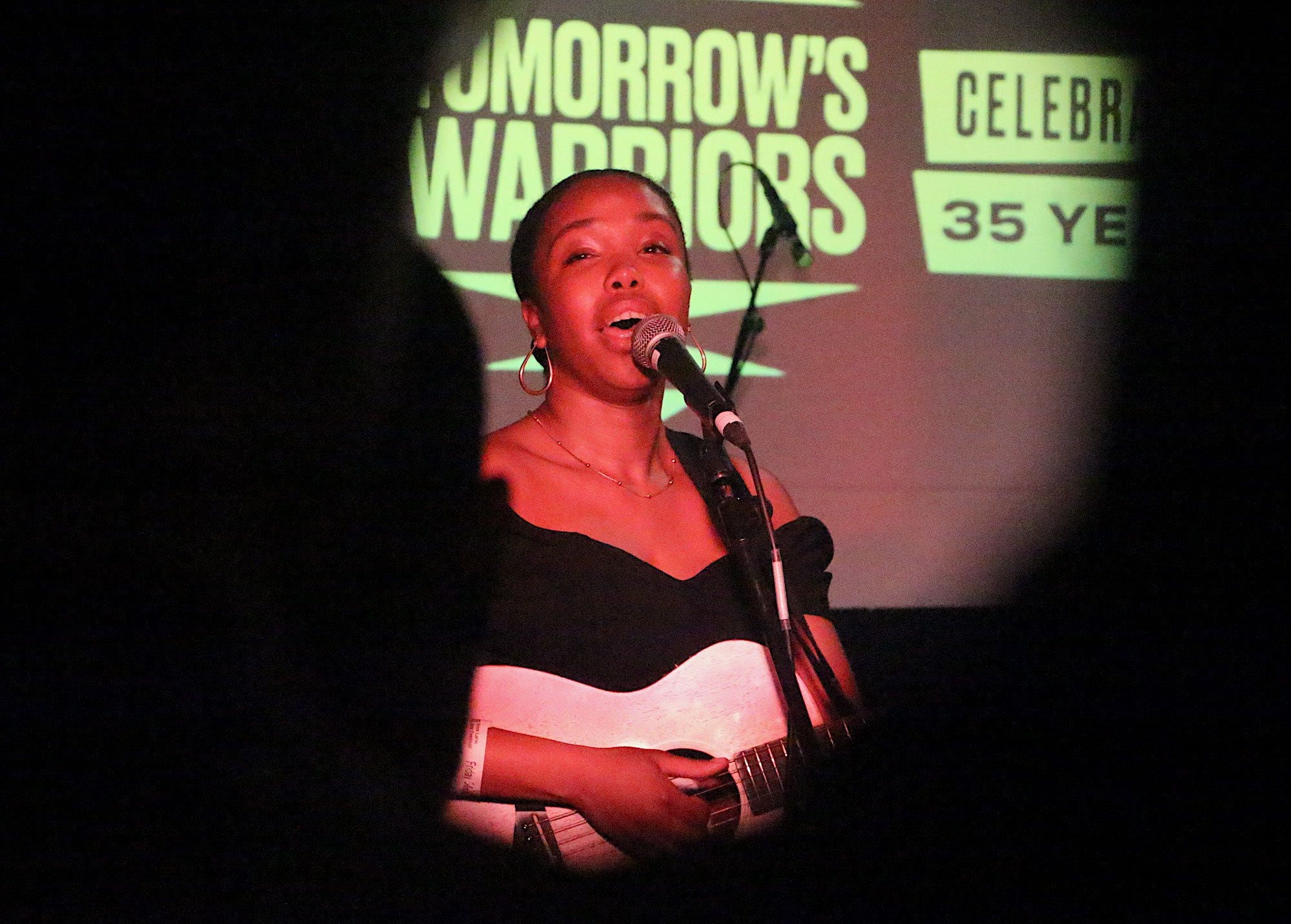
Then there was Kianja’s blistering singer-songwriter set, also on the Tomorrow’s Warriors stage on Friday, where - accompanied just by her own acoustic guitar, piano (the consummate Jay Verma) and drums - an artist with plenty of experience within the blurred spaces between the genres she grew up listening to gave an object lesson in the limitless potential of a stripped-back vocal jazz presentation. Her already considerable recorded output includes cameos on new-school fusion anthem ‘Thunder’ by Mackwood, and on a cover of En Vogue’s ‘Don’t Let Go’ by electro-indie band Bastille; and her several solo releases showcase her mastery of a range of production styles and settings. But here, in the tried-and-tested acoustic trio format, the focus was on her tight, inventive songwriting, which tackles a variety of heavy-hitting topics with aplomb, and via vocal performances that would have been the envy of many an established headliner. What she has to say is important and beautifully stated, and the way she sings it means you know it’s the truth. At times this was spine-tingling: echoes of Ella and Etta, Sade and Lauryn Hill. “I wanna know, is there a place for me?” she sang in the closing song: to which the answer is an emphatic, resounding “oh hell yes.”
Of course, there was plenty around over the weekend to showcase and represent the brilliant, genre-fluid creativity seemingly seeping out of every pore of London’s improvised music-making community. Many of these sets served to foreground the role of several self-sustaining organisations and the mini-scenes and the discrete creative ecosystems each has generated, catalysed and supported. Yet even here, there were strong ties linking the new music to its roots.
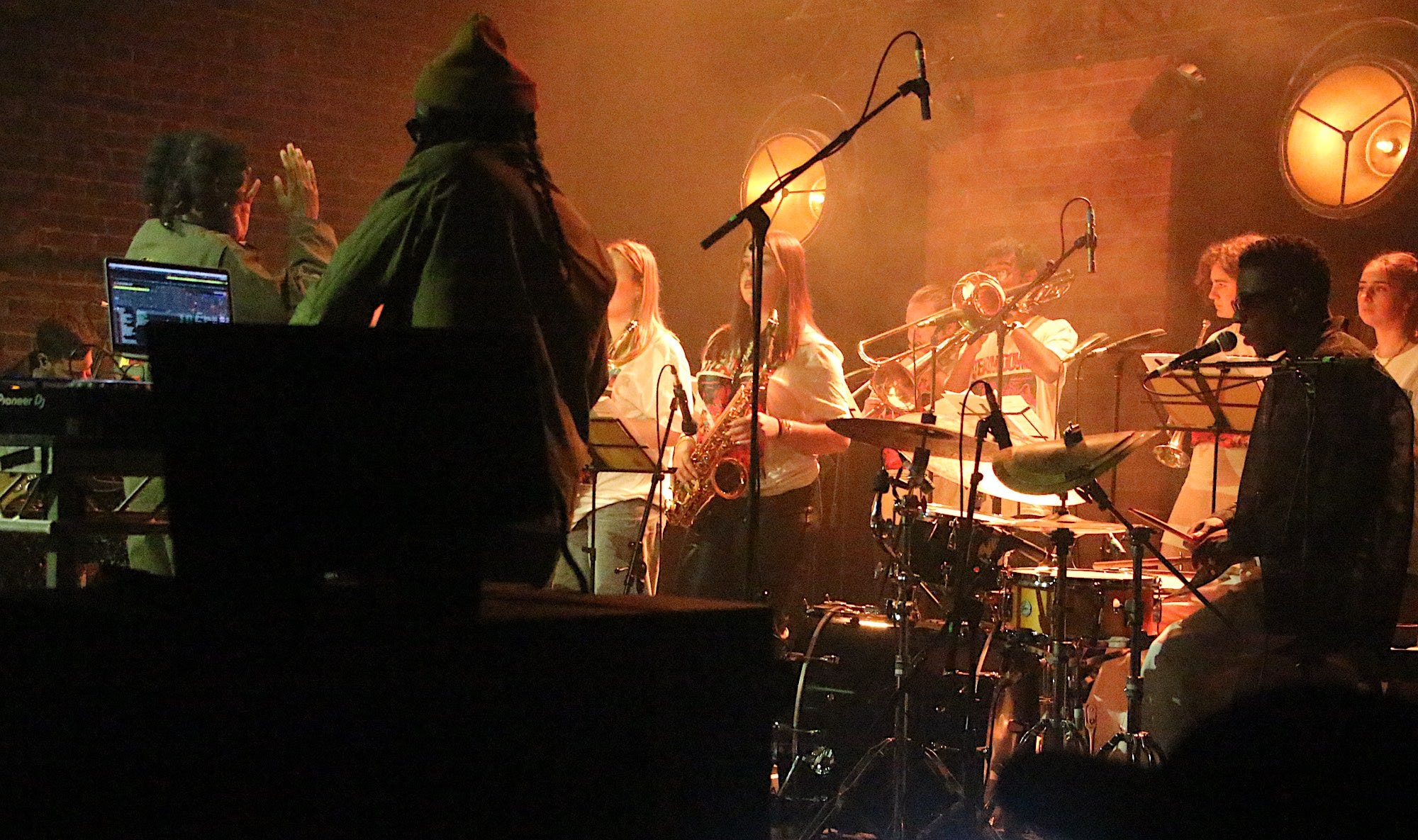
The mighty Steam Down packed Village Underground on Saturday afternoon - not just pulling a capacity audience but putting more people on the stage than one might normally expect to see there. The band/club/community’s instigator and central driving force, Ahnansé, made sure his involvement as one of the National Youth Jazz Orchestra’s resident musical directors wasn’t all one-way traffic by bringing a dozen NYJO players in for the day: together, they turned tracks from last year’s brilliant Steam Down album into a totally new kind of past-meets-present music. If we have to label it, perhaps it was punk-funk big-band - but all that matters is that the sound and the sentiments felt epic. There was time only for six songs, but during them every NYJO player got to solo, Ahnansé making sure to include and empower every last one of them. His SD bandmates were on impeccable form, Lorenz Okello delighting and confounding the crowd with an impish, cheeky, almost stand-up-comedy-routine of a solo in the opening ‘Let It Go’, stabs and blurts from his keyboard gradually taking on a new shape, a new path found through the sinuous song’s top line. The messages of self-reliance, self-belief and an encouragement to ask the right people the difficult questions in the already potent agit-prop of ‘No Delay’ (”Rise up! Rise again!”) were transformed by the massive arrangement from call to action to anthem for the resistance, while the remarkable, potent ‘Oh My God’ - written by and a fabulous showcase for Afronaut Zu - just keeps on getting bigger and better.
On Sunday, a second stage at 93 Feet East was given over to one of the newer communities, The Five Points Project. Dropping in at various times during the day was a treat - one moment you’re in the middle of a jammed-up party with an uncountable number of musicians hammering away at a riff borrowed from Aaron Neville’s ‘Hercules’ while vocalists and crowd chant “En-Er-Gy! En-Er-Gy!”, the next there’s grime emcees firing off volleys of syllables while the crowd bounces to a crisp and bass-heavy track. And while Orii were not present on the bill, that other newer improvising-music community were represented on the Jazz Re:freshed stage, where Benji ‘The Chief’ Appiah - also a Steam Down veteran - was showcasing his own emerging project. He managed to pull something of a surprise, announcing at the start of the set that he felt incredibly nervous. Of course, it was impossible to tell that from his playing, Appiah as ever making the superimposition of multiple polyrhythms in a single measure from his drum stool look like it came as easily and naturally to him as breathing. But the opening song hinted at the reasons - it was called ‘Pressure’, and he mentioned that composing it was an acknowledgement that he had gone against his parents’ wishes when he opted to make his career in music. Here, again, the new sound of a younger generation made frequent nods back to the past - albeit, in Appiah’s case, the reference points came from 1970s fusion rather than 1950s hard bop. But still, that music was in there too, somehow, somewhere.
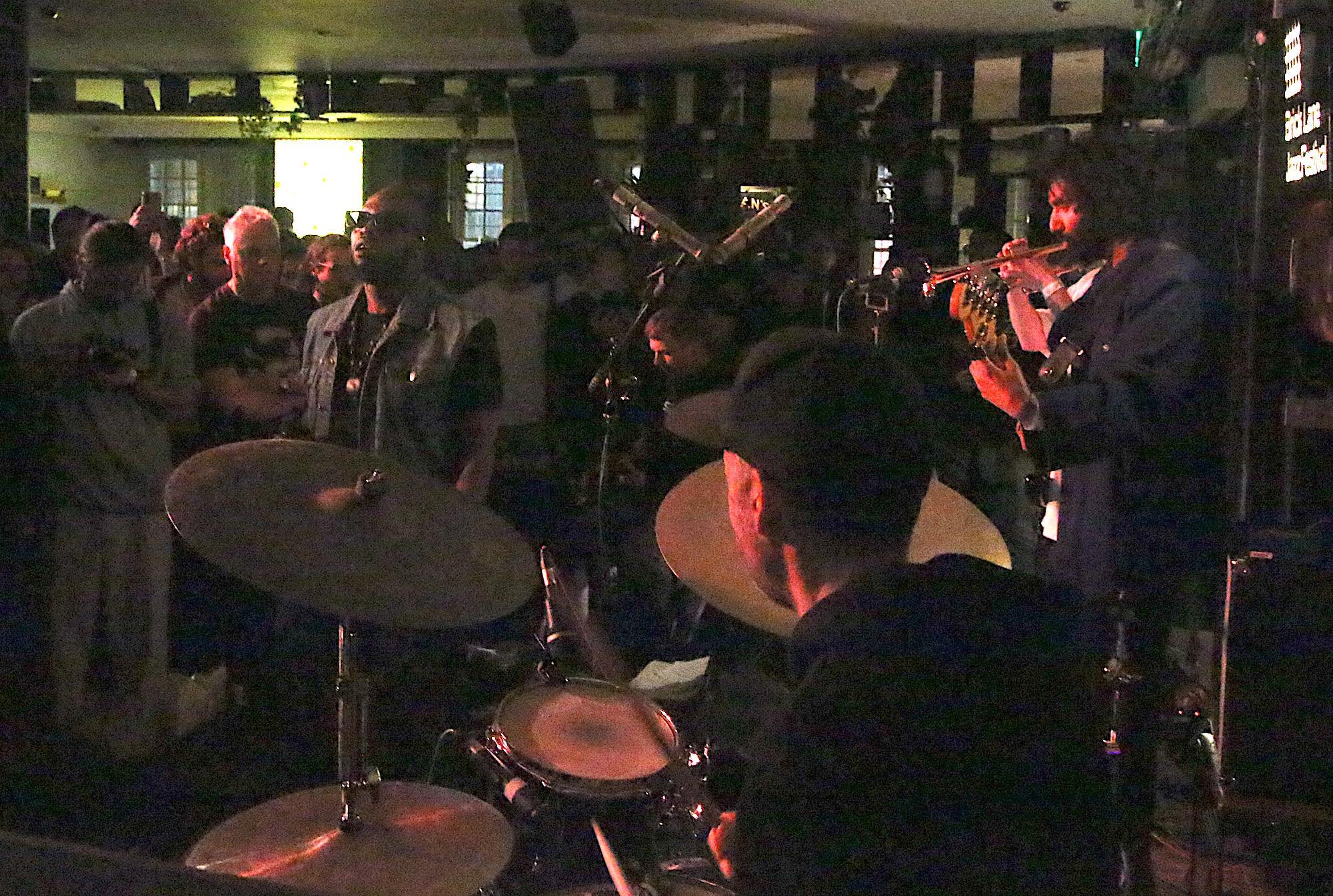
Richard Spaven completed Jazz Re:freshed’s opening-night pairing of bands led by iconoclastic drummers, and getting to watch from literally over his shoulder for the whole set still gave no clue how he does what he does. There’s a video on his website - part of a series of drum lessons on Patreon, accessible to paying members; I’m seriously tempted to subscribe, even though I’ve never tried to play a drum for real and have no chance of navigating that path now - where he breaks down the concept of displacement, and shows how to play it. But even that leaves me completely dumbfounded. There were points in the set where the drum pattern appeared to be speeding up and slowing down, yet the tempo of the song never changed. How does he do that? Displacement would appear to be the answer - moving the point in the pattern where the snare lands, pushing it back a beat every few bars, until eventually it’s moved back to where it started. But that still doesn’t adequately explain the way he makes the shapes of his songs shift so fluidly while their structure remains so solid.
Spaven and Appiah both also took time while on stage to thank JRF and pay tribute to the late Bunny Bread, the photographer and artist who worked with the organisation from its inception and was well-known and much loved by the musicians who have played gigs for, or made records with, the pioneering and vital talent incubator. As Spaven also acknowledged, these are tough times for Jazz Re:freshed, the return to 91 for the BLJF somewhat bittersweet after the same venue cancelled their vital weekly gig late last year. Jazz Re:freshed may be temporarily homeless, but that surely will not remain the case for long. There was a constant feel of celebration at their stage throughout the weekend, and evidence of how much the weekly is missed was evident ahead of every set, with the queues to get in stretching halfway to Whitechapel.
Again, while JRF is generally thought of as providing a platform for new-school jazz, there was plenty of music made on their BLJF stage which reached back into forms that feel more traditional or time-served. Marlon the Pannist may be the maestro of one of the newer instruments in the jazz armoury, but the steel pan has traditions of its own, which his forward-facing music always takes great care to honour. One tune, ‘The Gift’, was written following what he said had been a case of musical miscommunication, and dealt with his realisation that his intuitive, self-learned technique was one he wasn’t able to teach - yet the song, built around a heartbeat pulse, left you with a sense of certainty that his music and his messages will always get through.
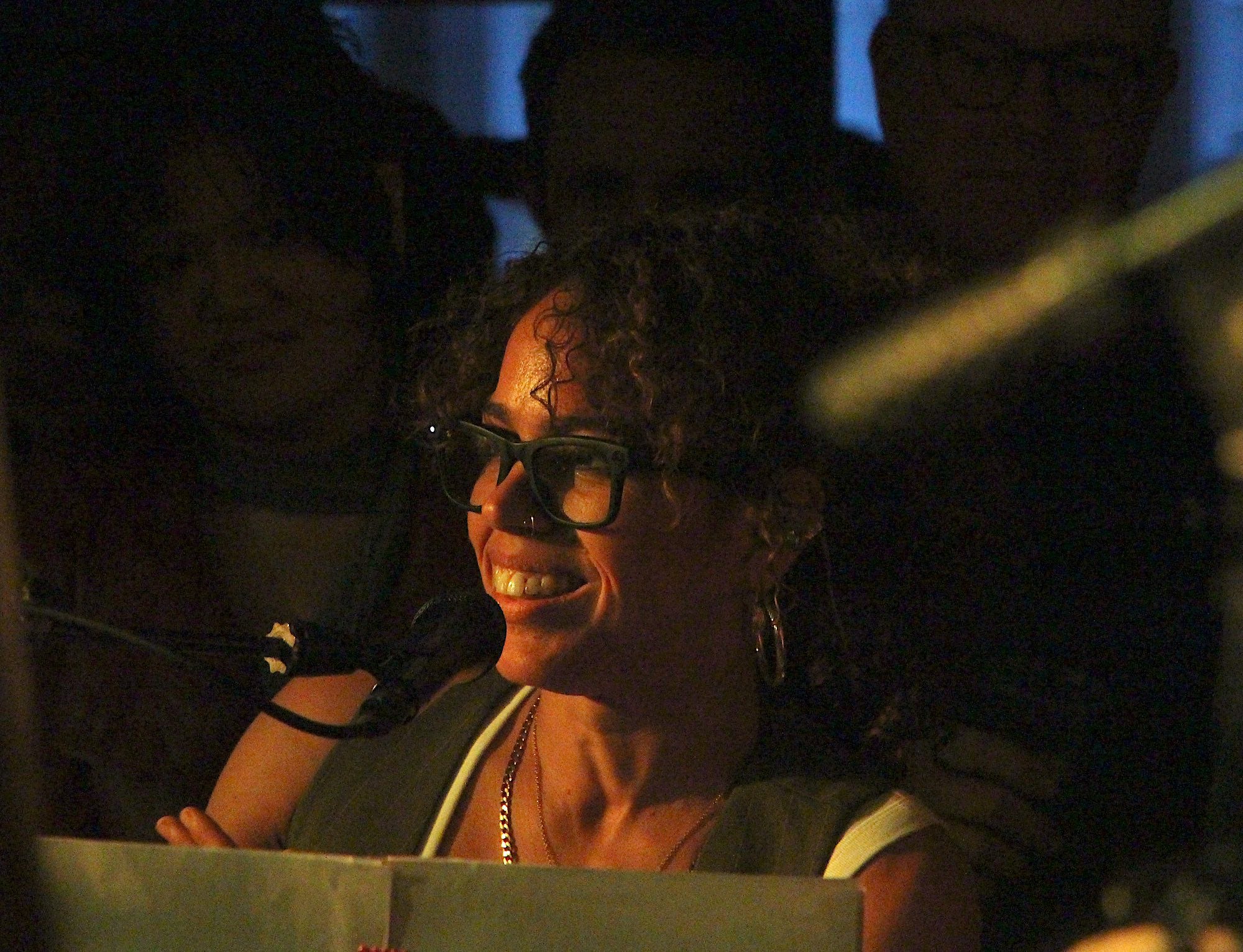
JRF co-founder Adam “Rockers” Moses made a superb choice when selecting the final set on their stage for the festival. Eliane Correa’s set matched almost miraculous musicianship with an easygoing but deeply felt strand of political and social commentary, all wrapped up in music of unrestrained joy and empowering, uplifting, soul-searing celebration. This was the Latin jazz party we didn’t know we needed: the band instantly pitching the audience into a fiery fiesta, each passing minute demanding the coining of new superlatives. The music followed on from last year’s release of two songs, ‘Everywhere’ and ‘Float’, which Correa - who, as Moses noted in his introduction, has spent a lot of her time in recent years touring with Hans Zimmer - described at the time as music that “does NOT sound like Cuban salsa at all! It leans strongly into the UK jazz sound, while continuing to keep Cuban musical language at its core, and finding inspiration in the groundedness and grandness of cinematic music”. And that’s what she and a truly outstanding band - drums, percussion, bass, alto/baritone sax, trombone, trumpet, along with Correa’s keys - proceeded to do, for 45 of the most exhilarating minutes anyone present is likely to be able to recall. For a while mid-set everyone laid out, leaving Alley Lloyd to play a bass solo that somehow combined pain, passion, love, tears, resilience and healing into incredible in-the-moment music that silenced the entire room; as the solo drew to its close, and just before everyone roared their appreciation, someone summed up all our feelings by yelling out in gratitude at this magical gift of pure joy. A staggering alto solo during ‘Black Cat’ from Allexa Nava had jaws dropping and hands raised in praise, while the reliably brilliant Rosie Turton played demanding solos with ferocious focus and a bubbling swagger throughout. The only thing that you’d have wanted to change about the entire performance was that it had to end at all.
It may seem counterintuitive that arguably the single institution most umbilically tied to the new generation of questing, omnivorous jazz-centric but genre-hopping young British musicians of the past few years is also probably the organisation most responsible for why those same musicians know and revere so many parts of jazz’s history. Yet if you broke most of the most adventurous new school of British jazz greats in half, they’d have the words “Tomorrow’s Warriors” running through them like letters in a stick of rock. So in many respects, the key performances at this year’s BLJF were the same ones as in previous editions: the opportunities on the last day for TW’s current students to get up on stage and show the crowd what they were about.
Frontline’s set was so heavily oversubscribed that there were two queues stretching outside the Truman Brewery site and onto Brick Lane itself. Lesson learned, I arrived 45 minutes early for the following set, by the Youth Ensemble, who definitely did not disappoint - and if they felt any pressure knowing that most of a previous iteration of this group is now trading as Ezra Collective, it was not evident in their performance. This year’s line-up featured Kassa Green-Jakcsi (alto saxophone), Lucas Heath-Ngugi (guitar), Marta Lopez-Baxe (vocals), Ciara Osuagwe (flute), Daniel Scott-Phillips (drums), Flo Valentine (bass) and Otoné Yee-King (keyboards). Their programme leader, Denys Baptiste, was a low-key presence, arriving moments before the set began, sticking to the back of the room throughout: he let the musicians run their own show, which was made up almost entirely of pieces composed by the members themselves, all rich in invention and interest, played with excellence, received with joy and gratitude.
But it was the first set of that last day that proved the most affecting. The Junior Jam was just that - an open-call opportunity for some of Tomorrow’s Warriors’ youngest members to get up in front of a real audience and make music with their friends. The quality of the playing was, frankly, astonishing: not just “pretty good considering their age”, but just great, full stop. Every bit as impressive was the performance of their leader, Ky Osborne, a superb choice by TW for a role that must be as much about ensuring everyone feels welcome, involved and free as it is about delivering musical direction or tips on style and technique. Although a highly experienced professional musician, Osborne is still a youngster himself. Visibly excited by the work being done around him, he was animatedly busy throughout, bringing the musicians together in a huddle between pieces to get everyone on the same page, applauding excellence and encouraging the crowd to follow suit, offering help when required. His enthusiasm was infectious, you could see it being transmitted to the musicians, and then feel it being sent forwards by them to the audience.
There was one moment that, perhaps more than any other single vignette, summed up not just the importance of Tomorrow’s Warriors and the essence of the British jazz community, but the empowering potential in events like BLJF that bring people of all ages and backgrounds together to share their love of every aspect of this music. A young keyboard player, perhaps caught in a moment of uncertainty, looked like they may be about to freeze - so Osborne leaned forward, had a quiet word in their ear, placed his hand over theirs, and helped them find the line the tune needed, gently showing them the way. Within seconds they were off again, a smile breaking through, the difficulty passed, the shadows chased away. But that was the weekend in a nutshell: warm, empowering, moving, inspirational, and every kind of wonderful.
A brilliant review of BLJF, Angus! The Festival has rapidly grown into an essential date in the jazz calendar. It's truly wonderful to see the diverse range of music and artists gracing the various festival stages.
Thank you for all the very kind words about Tomorrow's Warriors and the musicians who make up this beautiful creative community. I just love seeing all of the various Warrior bands playing their hearts out on the TW stage, and witnessing their development year on year. It's heartwarming and life-affirming and, during such challenge times, just watching the young musicians on stage reminds us why we do what we do and why we are all so passionate about ensuring TW and others can continue nurturing these incredible, creative artists. More power to all those who, individually and collectively, help keep jazz alive and thriving!
Thank you ever so much for your kind words it's so deeply appreciated